Timber leads bio-based shift

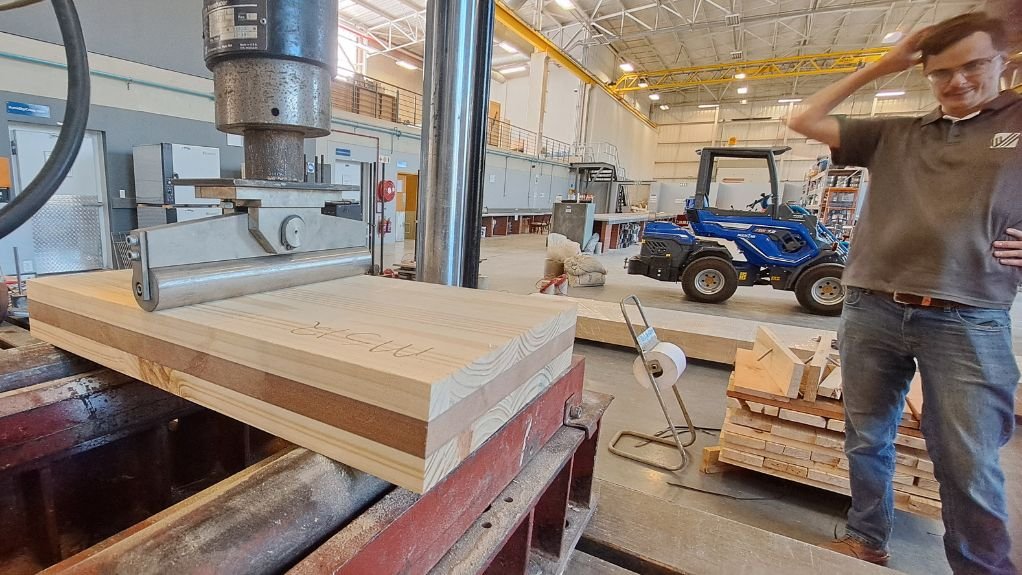
EXISTING STANDARDS Timber is relatively well supported by existing standards, while bamboo, hemp and mycelium require further testing, performance data and design guidance



Bio-based construction materials generally compare favourably with conventional materials in terms of embodied carbon, although performance varies in terms of material and application, says tertiary education institution University of Pretoria (UP) associate professor Schalk Grobbelaar.
He notes that timber has the strongest evidence base: “A review of 100 residential building life-cycle energy studies found timber buildings had, on average, 28% lower embodied energy than concrete buildings, and 47% lower than steel buildings.”
Grobbelaar tells Engineering News that a building material made from hemp and a lime-based binder – known as hempcrete – also shows strong potential, particularly for non-load-bearing walling and insulation.
“Studies indicate hemp-lime wall systems can achieve lower life-cycle carbon emissions than conventional wall systems,” he says, adding that bamboo also offers environmental benefits through rapid renewability and carbon storage and substitution potential, with life-cycle assessments showing lower impacts than those of conventional materials.
Meanwhile, mycelium-based materials remain at an early stage, but might compare favourably with some insulation products, making them suitable for insulation, acoustic panels and interior applications.
He adds that the main advantages of these materials in South Africa include lower embodied carbon, improved resource efficiency and the opportunity to develop green value chains.
For now, Grobbelaar identifies timber as the most viable material for wider adoption, as it already has a strong local supply base and established construction pathways, while bamboo, hemp and mycelium are promising complementary materials.
“Technical constraints differ by material. Timber is the most mature, with many concerns addressed through grading, treatment, design methods and existing standards.”
Remaining challenges pertain to expanding local testing data, improving design familiarity and strengthening certification pathways. In contrast, bamboo, hemp and mycelium face limitations linked to variability, durability, fire behaviour, moisture control and performance verification, Grobbelaar adds.
Materials Selection
Cost, availability and supply chain maturity are decisive factors in materials selection, Grobbelaar says.
Timber is supported by existing forestry resources and processing capacity. Bamboo, hemp and mycelium depend on the development of cultivation, processing, certification and installer capacity to scale.
UP is supporting industry uptake through the York Timbers Chair in Wood Structural Engineering. The programme focuses on structural timber research, engineered wood systems, performance testing, affordable housing concepts and skills development to build industry confidence.
Grobbelaar adds that bio-based materials can improve energy efficiency and indoor environmental quality through improved insulation, reduced thermal bridging and moisture regulation. However, he stresses that their effectiveness depends on integration with passive design strategies.
Bio-based construction can support circularity through renewable sourcing, reuse and responsible end-of-life pathways, and Grobbelaar expects timber – which is relatively well supported by existing standards – to play a central role in South Africa. Other alternative building materials can complement it in hybrid construction systems, but they require further testing, performance data and design guidance.
Article Enquiry
Email Article
Save Article
Feedback
To advertise email advertising@creamermedia.co.za or click here
Research Reports

Projects


Latest Multimedia

Latest News


Showroom

Developed to exceed the latest EN 15964 standards for police breathalysers proving that it will remain accurate and reliable for many years to come.
VISIT SHOWROOM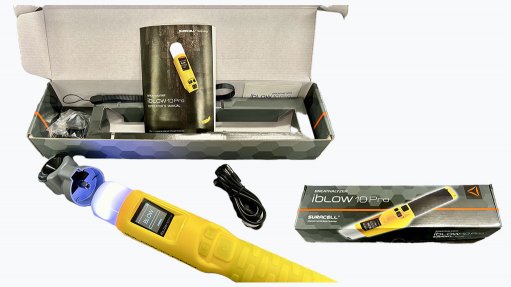
Supplier & Distributor of the Widest Range of Accurate & Easy-to-Use Alcohol Breathalysers
VISIT SHOWROOM



Press Office
Announcements
What's On
Subscribe to improve your user experience...
Option 1 (equivalent of R125 a month):
Receive a weekly copy of Creamer Media's Engineering News & Mining Weekly magazine
(print copy for those in South Africa and e-magazine for those outside of South Africa)
Receive daily email newsletters
Access to full search results
Access archive of magazine back copies
Access to Projects in Progress
Access to ONE Research Report of your choice in PDF format
Option 2 (equivalent of R375 a month):
All benefits from Option 1
PLUS
Access to Creamer Media's Research Channel Africa for ALL Research Reports, in PDF format, on various industrial and mining sectors
including Electricity; Water; Energy Transition; Hydrogen; Roads, Rail and Ports; Coal; Gold; Platinum; Battery Metals; etc.
Already a subscriber?
Forgotten your password?
Receive weekly copy of Creamer Media's Engineering News & Mining Weekly magazine (print copy for those in South Africa and e-magazine for those outside of South Africa)
➕
Recieve daily email newsletters
➕
Access to full search results
➕
Access archive of magazine back copies
➕
Access to Projects in Progress
➕
Access to ONE Research Report of your choice in PDF format
RESEARCH CHANNEL AFRICA
R4500 (equivalent of R375 a month)
SUBSCRIBEAll benefits from Option 1
➕
Access to Creamer Media's Research Channel Africa for ALL Research Reports on various industrial and mining sectors, in PDF format, including on:
Electricity
➕
Water
➕
Energy Transition
➕
Hydrogen
➕
Roads, Rail and Ports
➕
Coal
➕
Gold
➕
Platinum
➕
Battery Metals
➕
etc.
Receive all benefits from Option 1 or Option 2 delivered to numerous people at your company
➕
Multiple User names and Passwords for simultaneous log-ins
➕
Intranet integration access to all in your organisation